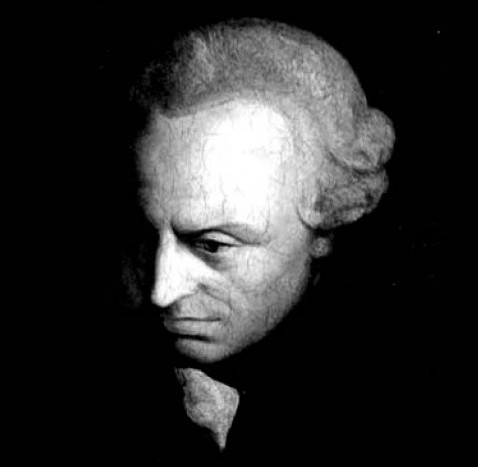
Bucknell University Gallery
Immanuel Kant whose roots go back directly to Aristotle, defined the domain of Academic Philosophy for over two centuries.
‘Thought’ proffered Immanuel Kant ‘is cognition by means of conception’. [See the later Posts on his: ‘Critique Of Pure Reason’]
What’s a ‘Conception’? That sounds like a difficult idea. Let’s start with ‘Concept’.
A ‘Concept’ says the Dictionary, is a: ‘a General Notion or Idea; a Conception’.
Great. So what’s an ‘Idea’? The Dictionary says it’s a: ‘Thought, Conception or Notion.’
We’ll, OK. So what’s a ‘Conception’? The Dictionary says it’s a: ‘Notion, Idea, Concept’.
Cognition is a concept. A Concept is that which is ‘conceptually differentiable’. But ‘conceptually differentiable’ is itself a concept.
A concept has a public understanding while ‘conception’ is just a private view. Yet concept is for you a conception and conception becomes a concept in the dictionary, unchanged regardless of who looks at it.
Concept; Conception; Concept of Conception; Conception of Concept. All Concepts. Or are they Conceptions?
 Not-Two
You must be logged in to post a comment.