The English word ‘God’, the scholars say, derives from the German gott, from the Proto-Indo-European ǵʰu-tó-m, itself sourced in the Sanskrit huta; ‘to pour’ [as in libation to the fire-altar] and its related word hotr [the reciter of the ritual-invocation].
[Or if you prefer a less severe term, ‘Divinity’, from the Latin: dyēus, later as Deus, Deity; from the Sanskrit: devam, ‘The Exalted Effulgent’.]
From the Vedic Yagñá to the Hebrew Altar, Sacrifice is the central religious act. Both words derive from Hu: ‘Of the Sacrifice’ [from the Latin, sacer: ‘to make sacred’] as used in the verses of the Rig Veda.
It’s not a good idea to be a goat on the Islamic Eid. Nor a buffalo at a Bengali Durga Pūjā. Nor a turkey at American Thanksgiving. But you cannot sacrifice by proxy. That is cheating. So what is the Sacrifice?
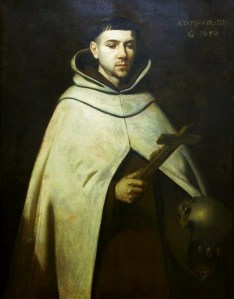
‘When he is brought to nothing, the highest degree of humility, the spiritual union between his soul and God will be effected‘.
So wrote St. John of the Cross, the Spanish Mystic. It is what the literature called: ‘Dying To Myself’.
You can find the same injunction expressed in every literate religious tradition, as word, as symbol, in metaphor, as folk-tale.
St. John and his close collaborator Teresa of Ávila, have influenced every famous modern Western Mystic [Merton, Dali, et al]. The roots of St. John’s Mysticism, as that of Teresa, go back to medieval Neo-Platonism, the ‘One’ of Plotinus [Enneads], itself linking to Greek and Sanskrit text.
 Not-Two
You must be logged in to post a comment.