In a consequential verse in the [‘Heart’] Sūtra, Śūnyathā [translated as: Emptiness] is ‘defined’ as equivalent to Nāmarūpa [translated as ‘Form’], or more precisely, as :’not-different from Form’. This orientation is helpful and saves you from thrashing around too much.
While the intrepid Translators did find a likely equivalent for the terms Śūnyathā in the Logician’s construct of ‘Emptiness’, they were flailing around for an equivalent choice for the term Nāmarūpa [or simply Rupa; by this time its interpretation in the Sanskrit itself had become entirely flaccid.]
Then the Translators noticed the English word ‘Form’ which happened to be part of the extended vocabulary of Classical Logic and its meaning appeared very close to the word Nāmarūpa. And so they went with ‘Form’, a palliative compromise.
The word ‘Form’ first appears in Plato’s ‘Theory of Forms’ which is probably where it was noticed. [The English word ‘Idea’ originates here.]
‘Form’ as commonly used in Classical Logic is: ‘Something that is marked, has taken shape’. A line, a curve, a color, a smell, a melody, a scratch. Logic comes alive, is operative, only in the abstract, only in the world of Form.
But Nāmarūpa does not exactly overlap with the objective ‘Form’ as defined by the Logician. Nāmarūpa like Form, is ‘Something that is marked, has taken shape’.
But Nāmarūpa, unlike the Logician’s Form, an ‘Objective’ presence, includes within its domain all ‘Subjective’ presence’ as well. Feeling is Nāmarūpa, a mental-image is Nāmarūpa, internal-dialogue is Nāmarūpa. All that you see with your eyes closed or hear with your ears plugged are just as much a part of Nāmarūpa.
If you can name it, mark it, express it, put a metaphorical finger on it, it is part of Nāmarūpa. And importantly, all references to Nāmarūpa are already contained in Nāmarūpa as are all thoughts you have in response to it. [Smell the Loop?].
If you slip on its self-referential feature you will confound Nāmarūpa with Awareness, Consciousness [the most common short-stop], Presence, ‘Everything’, ‘Higher-Power’ and other such heavy concepts, and find yourself thrashing around on the tails of the Self-Loop.
Why does the modern Logician not include the ‘Subjective’ presence so integral to Nāmarūpa within his own definition of ‘Form’? He doesn’t because the rules of Logic say that what happens in his Mental-Space belongs to him. In fact it is him.
The Logician recognizes himself, has modeled himself from just that very mix of elements that stand in counter-point to the abstraction he has defined as ‘Form’.
Mental-Space is not in his field-of-vision because it is one with his field-of-vision. It is what makes him who he is. Its elements are part of his organic contact lenses and without them he will not be able to see as he see’s. [See Post: Ahankára: ‘Sum, ergo cogito, sentio‘]
The Logician’s ‘Form’ as used here is not to be conflated with ‘Logical Form’, a different and very useful concept.
The material can be expanded substantially if one were to go into the later evolution of Platonic Form and the Academic Philosopher’s love of ‘Universals’. But I shall stop here.

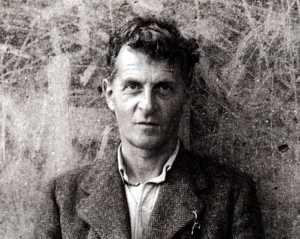
![Alan Mathison Turing [1912-1954]](https://not-two.org/wp-content/uploads/2014/04/alan_turing.jpg "Alan Mathison Turing [1912-1954]")
![Athanasius of Alexandria [296-373]](https://not-two.org/wp-content/uploads/2014/02/1347_athanasius.jpg)


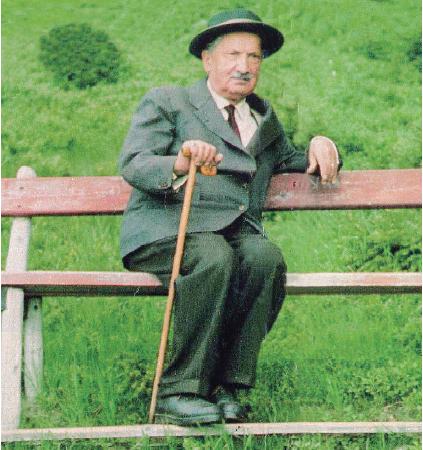
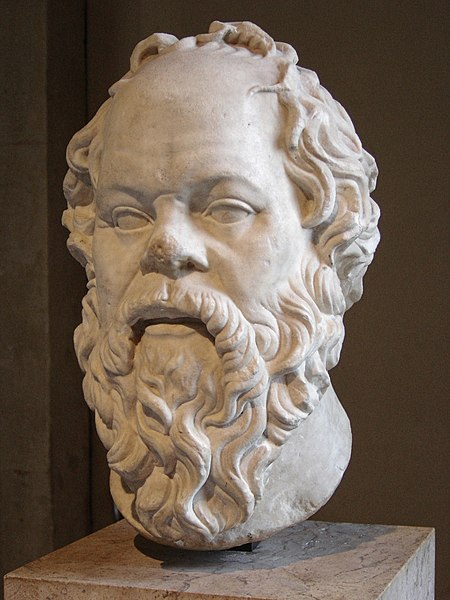
![Aristotle [384-322 B.C.] National Museum, Athens.](https://not-two.org/wp-content/uploads/2018/03/20-09-7-aristotle.jpg "Aristotle [384-322 B.C.] National Museum, Athens.")


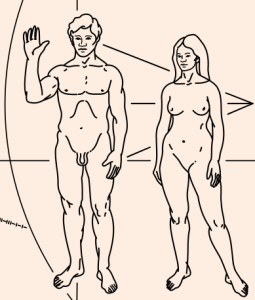
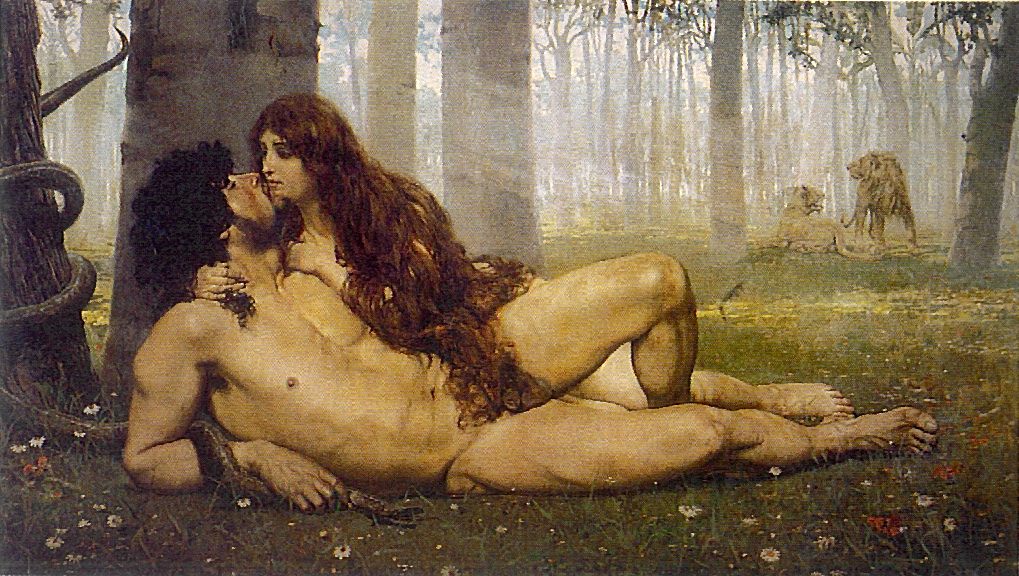

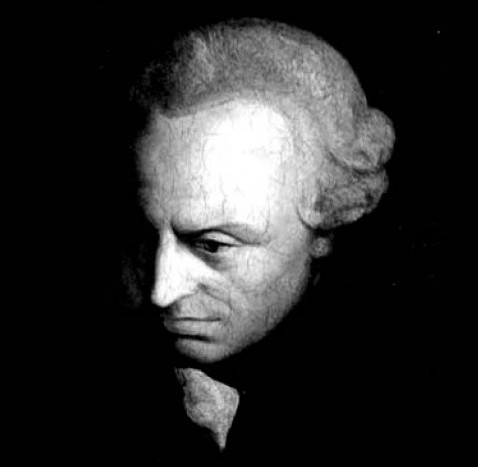
![Immanuel Kant [1724-1804] Bucknell University Gallery](https://not-two.org/wp-content/uploads/2014/03/immanuel-kant-e1402915992835.jpg?w=300 "Immanuel Kant [1724-1804] Bucknell University Gallery")

![Immanuel Kant [1724-1804] Bucknell University Gallery](https://not-two.org/wp-content/uploads/2014/03/immanuel-kant-e1402915992835.jpg?w=300&h=293)




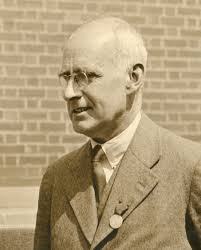
![Nickolaus Copernicus [1473-1543] Portrait, Torum Town-Hall, Poland](https://not-two.org/wp-content/uploads/2014/03/copernicus.jpg?w=253 "Nickolaus Copernicus [1473-1543] Portrait, Torum Town-Hall, Poland")

 Not-Two
You must be logged in to post a comment.