‘My own suspicion is that the universe is not only queerer than we suppose, but queerer than we can suppose’.
A vital distinction.
'This Unformulated Principle'
‘My own suspicion is that the universe is not only queerer than we suppose, but queerer than we can suppose’.
A vital distinction.

‘Explanation’ is from the Latin Ex-planationem: ‘to make plain, to flatten [planus].
Everyone wants one, feels obliged to ask for one and acts deprived if denied on.
An ‘Explanation’ flattens things out so that they fit within a Modeled-View. Just like plaining a piece of irregular wood.
In this tripped age where Reason is confounded with the Rational, the most insistent and socially-sanctified demand is for an ‘Explanation’.
‘Oh! That makes sense!’. In other words, an explanation falls in line, takes its assigned slot within the broad mix of paradigms, preferences, prejudices, conveniences and cultural cues that grant a view acceptance, and when tightly in conformance, applause.
When you say: ‘That explanation makes sense!’, it means it tucks nicely into your backpack, logically fits [i.e.,’is consistent’] within the umbrella of convention, views widely accepted as valid.
And the base of this umbrella is the presumption of an Independent [hence, separated] ‘Self’. The ‘Subject-Object’ Divide.
What happens if you skip out on investigating the first presumption of Inquiry and proceed with the Inquiry?
The word ‘Model’ is etymologically related to the Sanskrit Māyā, from the root Ma: To Build’. And less directly to ‘Man’ [Manushya] and ‘Mind’ [Manas].
A ‘Model’ is a ‘Double’, a construct deep in the belly of ‘Two-ness’ [‘Double: from the Latin: Duo: two; Plus: extended; multiplied].
A toy-car is a model. So is a doll’s-house. A ‘Model’ is a creation, a re-construction of the original, a re-presentation, not the Real McCoy.

But the most important models are mental-models, the ones we build inside our heads using things that ‘double’.
Sign and symbol that refer and come alive in such building blocks as the Alphabet and the Number System. All mediums in fact conducive to referential traffic.
An understanding mounted on assumptions, extended in corresponding beliefs, then conceptualized in binary structures [True: False; Up: Down] and expressed in the vocabulary of signs and symbols, typically language and logic, is called a ‘Model’.
Model begins in assumption. So what is my first assumption? That there is such a thing as a ‘Me’ with such things called ‘assumptions’ stuffed inside my head, sort of like socks in a drawer.
Watch out. To elaborate breezily on Model as an ‘Interpretation’ and equate a Modeled-Reality to an ‘Interpreted Reality’ is to miss the point. The notion of ‘Interpretation’ is itself a modeled-idea, as is the very notion of ‘Model’. Fresh Academics and Deconstructionists are the most susceptible to this take.
Importantly, there is nothing ‘Wrong’ with Model. ‘Right and Wrong’ themselves are divisions made in the context of Model.
Everytime I feel dispirited about the future of this creature called ‘Man’, I reach for this learned quote:
‘One aspect that sharply differentiates Man from Nature is his highly developed capacity for thought, feeling and deliberate action. Here and there in other animals, rudiments of this capacity may occasionally be found, but the full blown development that is called Mind is unmatched elsewhere in Nature‘.
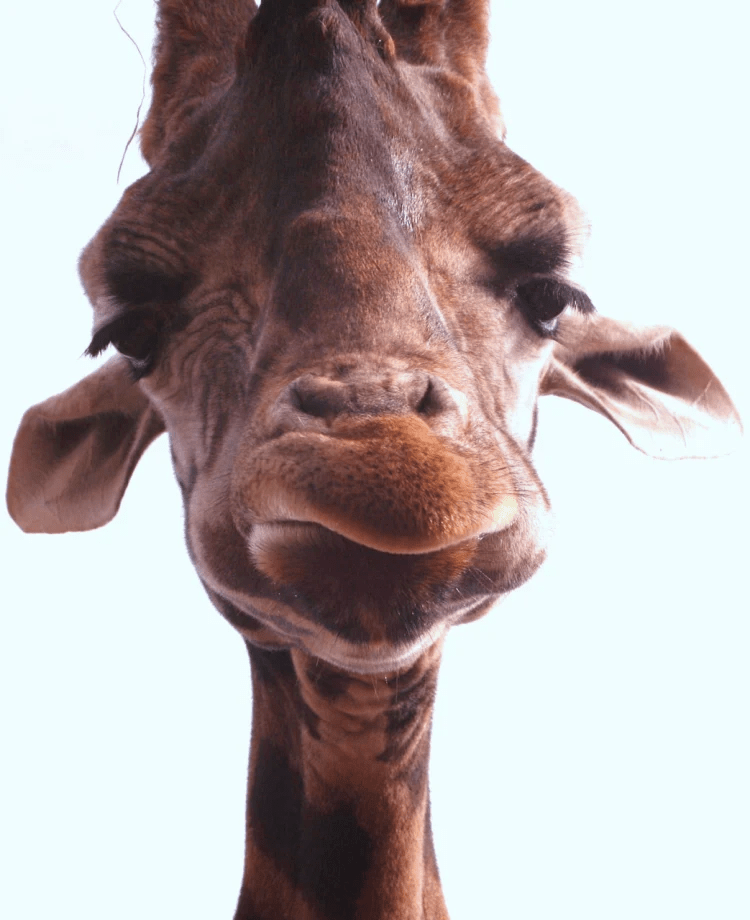
We don’t quite know if a Giraffe has a Mind. But we are absolutely sure that we have one.
Our Mind told us so.
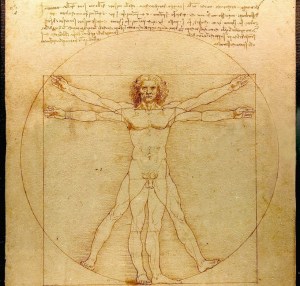
Homer’s Odyssey begins with the word ‘Man’ [Andra, from the Attic-Greek Aner, as in the English Anthropo].
‘Man’ [as in the Sanskrit Manush, Manas] is: ‘That which has Mind’.
How is ‘Man’ different say, from a Mattress? Man is different because Man alone has Mind. This has been the traditional answer since antiquity.
Man is different because Man alone ‘Thinks’. The defining attribute of Man is his Mind. And with this Mind, Man constructs his World as Model. And its central character is his model of himself as ‘Man’.
So what is ‘Mind’?
I don’t know what Mind is. But I do know this. Every time I say: ‘Gotcha!’, every time I use Mind to hold forth on the Nature of Mind, I am back in my circular whirl.
Very wise-men have been trying to get a handle on this thing called ‘Mind’ for a few millennia and have gotten nowhere. Divine origin? The center of cognition, emotion and volition? The firing of synapse on brain tissue?
But this ‘Mind’ of mine [which of course I know exists] keeps giving me the slip. And to further confuse matters, Folks Who Know say that Mind is also the depository of ‘Thought’, the dodgy character we just met.
I can’t see it, hear it, smell it, taste it, touch it. And yet, darn it all, it feels awfully real to me. This ghost behind my nose and between my ears.
And anything I pick and label as ‘Mind’ using this Mind of mine cannot be Mind, can be anything but Mind.
So. ‘What is ‘Mind’? As I said, that’s about where the wise-men left it.
‘If you use your Mind to study Reality’, quipped the famously laconic Bodhidharman, the first Patriarch of Zen, ‘you won’t understand either your Mind or Reality’

You are in the white toyota in the back of the middle row
and desperately need to pee.
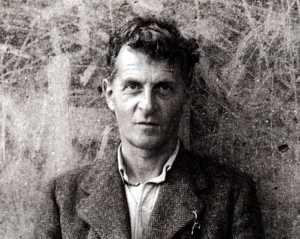
Ludwig Wittgenstein wrote: ‘When I think in Language there are not meanings going through my mind in addition to the verbal expressions: the language is itself the vehicle of thought’.
Professors have made a nice living arguing about what a ‘Thought’ and a ‘Concept’ is for centuries [using Thought and Concept, of course.]
But here was Wittgenstein saying it’s all mostly words. This mysterious thing we called ‘Thinking’ is made up of just plain old words. Games we play with words.
Don’t believe him of course. Get back on the Meditation Mat and Sit.
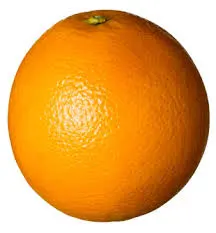
What is the ‘Orangeness’ in an Orange?
What is common between a sliced and a peeled Orange? A ripe and a rotten Orange? A nibbled Orange and a fresh one?
A picture of an Orange, the sound ‘Orange Juice’, the taste of Orange pop, the smell of Orange peel, the touch of Orange pip, the letters ‘O R A N G E’, on a page. The negation: ‘Not-Orange’.
Orangeness is an idea, a concept. A thought.
‘I don’t exactly know what an Orange is Professor, but I sure know how to pick one’. Or do I?
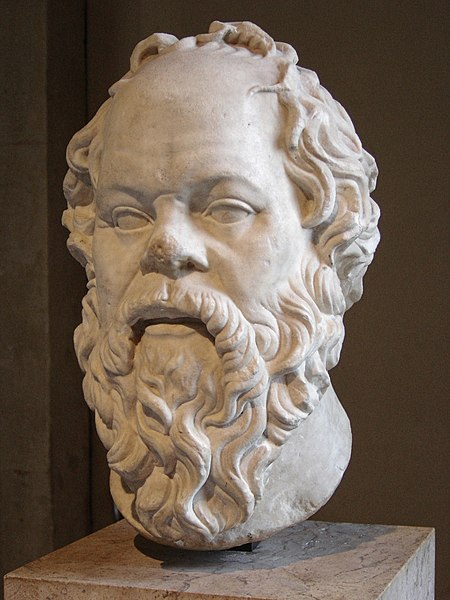
When Thaetetus asks Socrates to describe ‘ Thinking’, Socrates replies:
‘As a discourse that the mind carries on with itself about any subject it is considering.
You must take this explanation as coming from an ignoramus. but I have a notion that, when the mind is thinking, it is simply talking to itself, asking questions and answering them, and saying yes or no.
When it reaches a decision-which may come slowly or in a sudden rush-when doubt is over and the two voices affirm the same thing, then we call that its ‘judgment.’
So I should describe thinking as discourse, and judgment as a statement pronounced, not aloud to someone else but silently to oneself.‘
I can silently unfold the phrase: ‘Elvis Lives!’ in my mind syllable by syllable in complete comprehension of its meaning.
Mental Verbalization is ‘I’ talking to ‘Me’. Monologue as Dialogue. A particular, often paralyzing bain of the Reflective Man.
Importantly, there is nothing ‘wrong’ with Thought. The various Mantric Formulas that evolved in the Dharmic Tradition play multiple roles, one of them being the reigning in of ‘Dispersed Thoughts’.
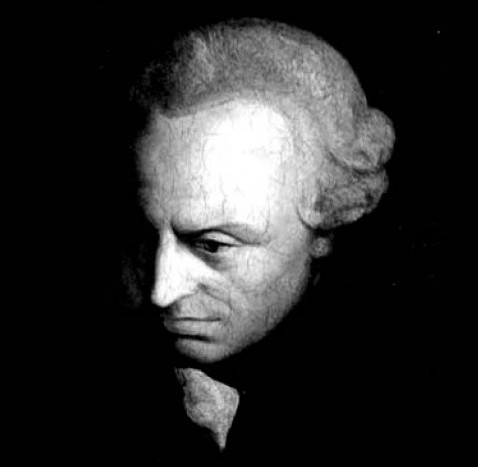
Immanuel Kant whose roots go back directly to Aristotle, defined the domain of Academic Philosophy for over two centuries.
‘Thought’ proffered Immanuel Kant ‘is cognition by means of conception’. [See the later Posts on his: ‘Critique Of Pure Reason’]
What’s a ‘Conception’? That sounds like a difficult idea. Let’s start with ‘Concept’.
A ‘Concept’ says the Dictionary, is a: ‘a General Notion or Idea; a Conception’.
Great. So what’s an ‘Idea’? The Dictionary says it’s a: ‘Thought, Conception or Notion.’
We’ll, OK. So what’s a ‘Conception’? The Dictionary says it’s a: ‘Notion, Idea, Concept’.
Cognition is a concept. A Concept is that which is ‘conceptually differentiable’. But ‘conceptually differentiable’ is itself a concept.
A concept has a public understanding while ‘conception’ is just a private view. Yet concept is for you a conception and conception becomes a concept in the dictionary, unchanged regardless of who looks at it.
Concept; Conception; Concept of Conception; Conception of Concept. All Concepts. Or are they Conceptions?
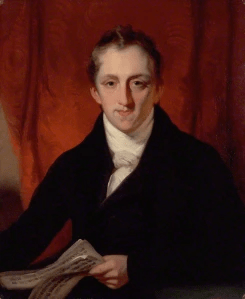
Here is the remarkable Horace Hayman Wilson [1786-1860], first European translator of the Rig Veda and the first occupant of the Boden chair for Sanskrit at Oxford.
Here he explains the Sanskrit term: Ahankára, which in its current use roughly translates to ‘Hubris, Conceit, Pride’.’
‘The sense of Ahankára cannot be very well rendered by any European term. It means the principle of individual existence, that which appropriates perceptions, and on which depend the notions, I think, I feel, I am.
It might be expressed by the proposition of Descartes reversed; ‘Sum, ergo cogito, sentio,’.
The moon-landing was faked in Utah. Cream Doughnuts widen arteries. My mother really loves me. Perhaps, perhaps not.
But I don’t have these insidious doubts about whose thoughts are bouncing around in my head.
The thoughts in my head are my thoughts. What happens in my mind is mine! mine! mine!
There is nothing else on the planet that is so taken for granted as belonging to ‘Me’ as ‘My Thoughts’. That’s why it is so real. As long as I have my thoughts, I have me.
I can wear your cuff-links and you can borrow my cologne but my thought is my thought and your thought is your thought. I might own a Bentley and only leg into silk underwear. But my thoughts are closer to me than both.
‘Thought’ and Voice [Vac] are the two things most closely associated with a ‘Me’, with the notion of Authorship. The better religious literature marks this out repeatedly. When I think, I think. When I speak, I speak. See the later Posts on Language.
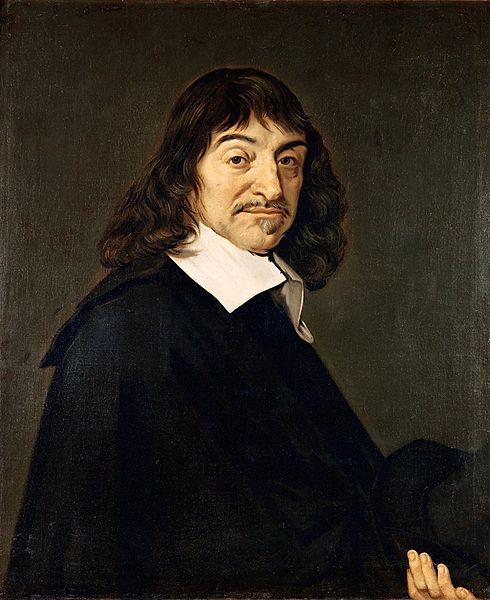
So it was that Rene Descartes, founder of Cartesian method and Father of Western Academic Philosophy exclaimed: ‘Thinking. At last I have discovered it- Thought. This alone is inseparable from me.’
‘I am Thinking. Therefore I am’: Cogito ergo sum.
René Descartes, like Aristotle before him and Kant and Leibniz after, and in sharp contrast to most other philosophers, knew when he was edging the territory of the absurd. His rationale was more nuanced than the standard academic bumper-sticker interpretation. I’ll get to it later in his less-known letters.
There is nothing I understand less than this thing called ‘Thought’.
Yet nothing is more real to me than this which I understand the least.
Dodgy Fellow, this ‘Thought’. So try and not think a thought for the next sixty seconds.
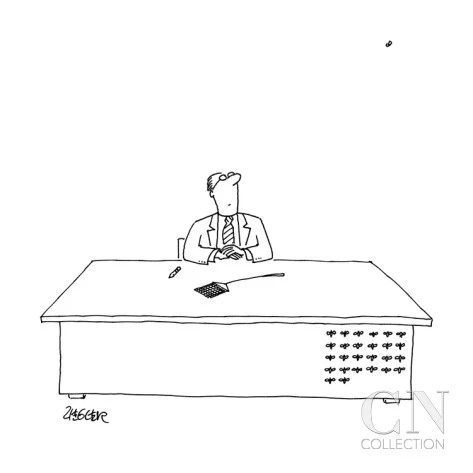
Do you know what a ‘Thought’ is?
I don’t. [But then, nor do Universities which do a fine trade in refining it.]
The problem is that every time I work up a thought to nail this buzzing fly called ‘Thought’, I’ve stuck myself in a very unpleasant Loop.
This thing I have nailed as ‘Thought’ by thinking about it, by that very fact, cannot be ‘Thought’.
It’s origin is unknown [grab that next thought please, and ask it where it came from].
It’s stage can’t be located. [Inside my head? Beneath the sink? In Kiev?] It’s terminus is not found. [Where do all those thoughts go, like stairs in an escalator?]. I can’t see it. I can’t hear it. I can’t smell it. And any thinking about it, muddles it more.
No self-respecting scientist would take seriously something to which he cannot give the simplest of coordinates.
At least one noted Philosopher majisterially defines a Philosopher as one who: ‘Thinks about Thinking’. It is roundly celebrated in academic circles as marking a penetrating summary insight.
The Meta-Trio: Thought, Mind and Consciousness.
‘Meta’, from the Greek, originally meant ‘Beyond’ as in Aristotle’s ‘Metaphysics’. Lately though it is a prefix assigned to reflective, self-referential states. Metadata is ‘Data about data’; Metatext is ‘Text about text’.
There are two aspects which define the Meta-Trio:
First, their self-referential nature. And second, their intimate, inviolable relationship to ‘Me’.
Any trek requires extensive time spent in intimate [and not always pleasant] proximity with these three fellows. So let’s take a few Posts to get to know them.
Wouldn’t you know, now there is a new word, sophisticated and mysterious, heard in Academic corridors called ‘Metacognition’. I’ll leave you to figure it out once you’ve read these Posts.

The Israeli Bombing of Civilian Lebanon: 1982
‘This is the entire essence of life: Who are you? What are you?’ wrote Leo Tolstoy [I’ve tried to finish: ‘War and Peace’. Twice.]
This idea of ‘I’ cuts a wide swath. It is not just for Vegans. It is the original question. And the final fault line.

‘Let me get this straight.
Your asking me if there is a ‘Me’? You want me to answer ‘yes’ or ‘no’ to: ‘Do I exist?’ What sort of a dumbassed question is that?
Of Course I exist. Of Course there is a ‘Me’. Jeez! Everybody knows that!
Says so right here on my application. Plain as daylight. Take a look.’
1. Name [Family]
2. Name [First]
3. Sex
4. Height
5. Weight
6. Ethnicity
7. Religious Affiliation [If any]
8. Cell Phone Number and Email Address
9. Residential Address
10. Drivers License State-of-Issue and Number
11. Date of Birth
12. Place of Birth [ City, Country]
13. Current Nationality
14. Marital Status
15. Spouse’s Name [If any]
16. Names of Children [if any]
17. Education [High School, College]
18. Occupation
19. Annual Income
20. Have you ever been convicted of a felony
21. Have you ever written Websites on ridiculous themes?
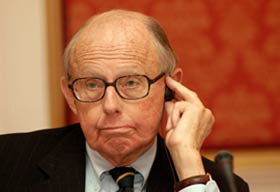
Here is Dr. Samuel Huntington from his: ‘The Clash of Civilizations’, that sits on every Foreign Ministers bookshelf:
‘A Civilization is the highest cultural grouping of people and the broadest level of cultural identity… Civilizations are the biggest ‘We’. [and] cultural identity is the central factor shaping a country’s associations and antagonisms…
The question: ‘Which side are you on? has been replaced by the much more fundamental one: ‘Who are you?’ Every state has to have an answer. That answer, its cultural identity, defines the state’s place in world politics, its friends and its enemies.’
The late Dr. Huntington was the Albert J. Weatherhead University Professor and Director of Harvard’s ‘Center For International Affairs’. Of interest, the above book came out [1996] shortly after Fukuyama’s modestly titled: ‘The End Of History’.
Is there a Little Fellow behind your nose and between your ears? A Teddy Bear behind your heart and beneath your ribs?
A Viewing Voyeur inside your eye and beneath your brow, that sees and thinks and feels and acts and makes you laugh and makes you cry?
If you find this language flip, I shall give it some gravitas.
Is there to be found, either by observation or by inference, and outside of an unexamined, inherited authority and unquestioned convention an ‘Independent and Separated Observer, ‘Self’, Subject’ in the guise of:
A Physical Body, a Cell, a DNA Code, an Awareness, a Totality, a Nullity, an Unity, an Ego, an Energy, a Life-Force, an Intelligence, an Existence, an ‘Organizing Principle’, an ‘Inner Being’, a Spirit, a ‘Soul’…
An ‘Independent and Separate Knowing Ontological Presence as Entity, Process or Abstraction’?
Go ahead and add any I may have missed. Don’t be shy.
Perhaps there is a Teddy Bear behind your heart and beneath your ribs. We are going to hunt the critter down.
Perhaps one of the strongest convictions of this, our strange Age, is: ‘I am my Body’.
The excerpt below is from the findings of Dr. Paul Aebersold’s [Smithsonian: 1953-54] radioisotope experiments. Earlier he had helped build the first Cyclotron at Berkeley.
‘Studies at the Oak Ridge Atomic Research Center have revealed that about 98 percent of all the atoms in a human body are replaced every year.
Experts..have concluded that there is a complete, 100 percent turnover of atoms in the body at least every five years. In other words, not one single atom present in your body today was there five years ago.
You get a new suit of skin every month and a new liver every six weeks. [Stomach] lining lasts five days…bones are not the solid, stable, concrete-like things you [thought]…the bones you have today are different from the bones you had a year ago.
This revelation brought great excitement to the New-Age community which claimed it confirmed their long-held belief in out-of-body experiences.
It was vigorously attacked by more sober scientists who after diligent research showed that the number was not 98% as claimed, but in fact only 91%.
Later findings on neural-cell DNA and Tooth-Enamel further brought down the number.
Perhaps you are your Tooth-Enamel.
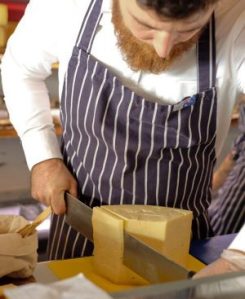
Cut once; get two. A pair is the first and minimal unit of division, the elemental DNA, the fundamental building block of every Man-Made Model.
Any wedge of cheese that I can cut once, I can cut twice. Or thrice. In fact I can cut it as fine as I want. I just need sharper and stronger knives.
I can if I am in the mood, cut it a trillion times. Then another trillion. And just keep going. But this can get tedious. And what I am cutting no longer tastes like cheese. So where should I stop?
[Now make sure to do all this in broad daylight. And do not nick the Higgs-Boson, a.k.a. the ‘God-Particle’, else the scientists at CERN will get very upset.]
What applies for cheese, applies for carrots and broccoli. At some point they get tossed into the salad.
The Atom in Physics, the Element in Chemistry, the Axiom in Logic, the Point in Mathematics, the Word in Language, the Morpheme in Linguistics..
‘Individual’: from the Latin, In-dividuus: that which is ‘Indivisible-Further’. As in a-tomous, for ‘atom’.
Do you remember where you stopped before climbing into your salad?
‘This is the entire essence of life: Who are you? What are you?’ wrote Leo Tolstoy [I’ve tried to finish: ‘War and Peace’. Twice.]
You will have more luck getting a roomful of Biologists agreeing on a definition for the word ‘Alive’, or Logicians for the word ‘Reason’, than you will with a roomful of Psychologists defining ‘Self’.
This young man, a Bio-Engineer with doctorates from both MIT and CalTech, knows it is a silicon-chip atop the neurons and between the firing synapses.
The Geneticist sneers at this simplification at what is clearly a Gene [imminent in its discovery].
We won’t even broach the Mystics for now. But a particularly famous Mystic’s definition from India is: ‘The sense of ‘I-ness”, which means whatever you want it to mean.
We go low-tech. We ask the Grammarian.
‘The Subject of a sentence is the person, place, thing, or idea that is doing or being something. It is what acts or is acted upon.’
Ego is Latin for ‘I’. The Cambridge definition reads: ‘Your idea or opinion of yourself’.
Note the Loop.
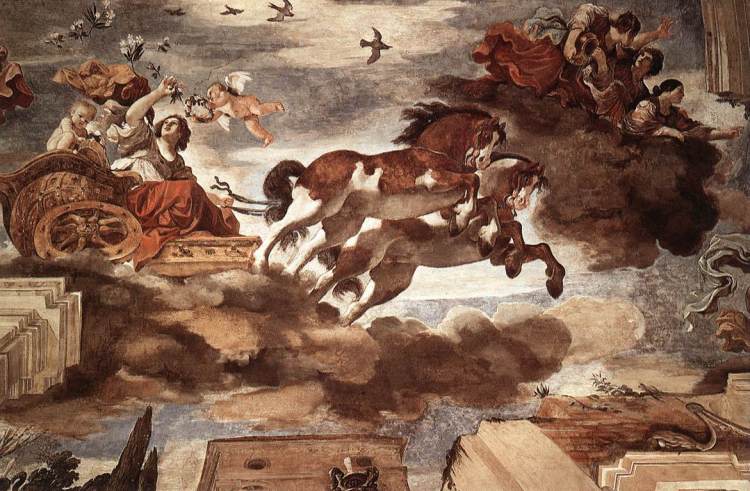
Aurora, the Roman ‘Goddess of the Dawn’
Guercino, 1621 CE, Ludovisi, Rome
The Rig Vedic Ushas, ‘Goddess of the Dawn’, parallel to the Latin Aurora and the Greek Eos, born of Sky [Dyaus, cognate with Zeus] and Earth [Prithvi] and sister to Night. The progeny of the divine dual, the first divide.
Humans were to Gods, Shakespeare noted, ‘as flies to wanton boys’. Self-absorbed, rank-obsessed, occasionally generous, frequently malevolent, they would throw you a crumb if in the right mood. But most of the time they just ignored you.
So one of the Wise-Men finally spoke-up:
‘You know, I’ve been thinking’. We’ve been doing this for over a thousand years and we’ve gotten nowhere. We’ve tried everything; made the Gods look like us, look different from us, tolerated their tantrums, their strange ways. Even allowed them to go immortal on us. And we are still exactly where we started.
And it struck me that in all these years we have never really sat down and said: ‘O.K. Let’s pause just for a second and ask ourselves: ‘So who or what is the Subject in search of this Object?”
Where is the ‘Man’ in search of the ‘God’?
The word Nirvāṇa in its proper definition has nothing at all to do with any empyrean ecstasy, cosmic peace or any of that later rubbish advertised in the Guru-Culture of today.
The word Nirvāṇa, literally an ‘Exhausting’, has its etymological roots in a fire that has ‘Come to Rest’. The Madhima Nikaya, the source most often cited, says it is like asking the direction taken by a dead fire: ‘To ask: ‘In which direction has [the dead] fire gone?’, is a question that: ‘does not fit the case’.
The answer to the question: ‘What is Nirvāṇa?’ lies in an understanding of the misunderstanding that underlies the question itself.
The self-scuttling has to be completed at the level of the questioner. Hence the early definition of Nirvāṇa as ‘The Exhaustion Of Philosophic Views’ [Is that a ‘Philosophic View’? A ‘Self-Eating Expression’?].
In Nirvāṇa the question: ‘What Is?’ is no longer your question. It’s not that answers are now miraculously revealed. Rather, the questions, having arisen from a false platform, simply dissolve.
Nirvāṇa enters the Dharmic dialogue at every level. It parallels the later construct of: ‘This Unformulate Principle’ and the The Mantra Of The Prajñā-Pāramithā, the core verse in the Hridaya [‘Heart’]Sūtra, and its approach-line: Śūnyathā.
It is markedly unwise, dangerously facile, to explain the nature of Nirvāṇa to one who can interpret it only from the platform of a Binary, as for instance that of a presumed independent [hence, separated] ‘Self’. [In other words, don’t write Sites like this one.]
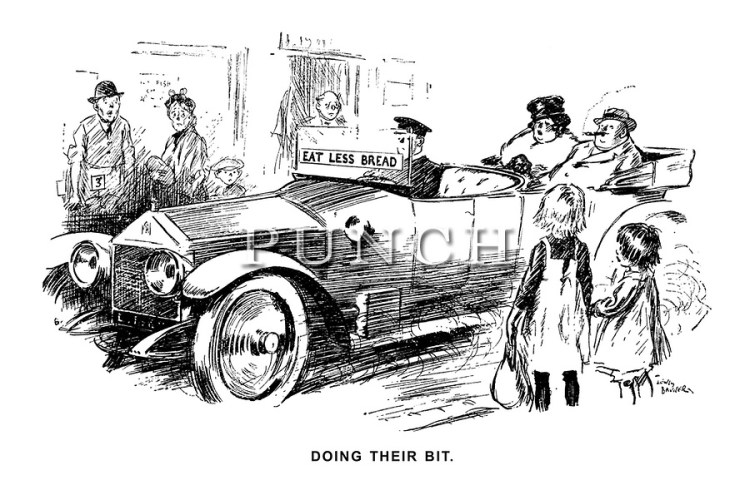
It’s sort of like the situation at the counter at the Rolls-Royce dealership. If you need to ask the price you probably can’t afford it. If you need to have Nirvāṇa explained, you won’t understand it.
Six hundred years following the release of the ‘Diamond-Cutter’ Sūtra, here is the Scholar-Monk Nāgārjuna:
‘There is not a whit of difference between Nirvāṇa and Saṃsāra [a disoriented search]’. And in case you find that ambiguous, he adds: ‘And there is not a whit of difference between Saṃsāra and Nirvāṇa.’ [Mūlamadhyamakakārikā]
Eight hundred years following Nāgārjuna, here is the Chinese-Monk Ch’ing-yüan Wei-hsin [circa 850 CE]
‘Before I had studied Zen for thirty years, I saw mountains as mountains, and waters as waters. When I arrived at a more intimate knowledge, I came to the point where I saw that mountains are not mountains, and waters are not waters.
But now that I have got its very substance I am at rest. For it’s just that I see mountains once again as mountains, and waters once again as waters.‘
The idea of ‘Infinity’ has long attracted the mathematically adventurous. And the philosophically credulous.
Have you ever had the compelling desire to fly faster than Light? We’ll, you can’t do it. And why can’t you do it?
The folks who worked out the Theory of Relativity found that as you approach the speed of Light, the amount of energy needed to move you an inch [or for that matter, a single electron] ‘Tends to Infinity’.
The symbol ‘0’ has been around for a long time. But the symbol ‘∞’ for ‘Infinity’ however is less than two centuries old making its appearance following the birth of Science and its need for abstract measurements [the Universe is ‘Finite but Unbounded’?].
The grizzled Dharmic monks and the geezers around the fountain-square in old Athens didn’t like the word very much. Told the young’uns to try and avoid using it.
It parallels their reluctance to grant the ‘Principle of Induction’ the status of ‘Law’. A Conjecture, yes; but not Law. Party-Poopers. What was their problem?
‘Infinity’ is from the Latin In-finitas, for ‘Unbounded, Unbordered’. The bells should go off right there. To give definition is to mark a boundary. And here we begin by defining something as the ‘Unbounded‘.
Any ‘Infinity’ you can point to includes the pointer, the pointed, and the label ‘Infinity’. It is an idea, a concept, best relegated to conversations over coffee in French cafe’s and university philosophy departments.
From the Isavasya Upanishad: ‘When taken away from the Infinite Whole [Purnam], the Infinite Whole remains the Infinite Whole’.
Infinity minus ten trillion is still Infinity. That’s the definition for this formally ‘Undefined Concept’. ‘Infinity’ is that which doesn’t budge when you take something away from it. Or add something to it.
We don’t quite know what Infinity is. But we are quite sure that ‘Infinity plus one’ is the same as it.
While you snuggle into the empty space of a vacuum tube [‘Tends to Zero’], enthusiastic Scientists are vigorously seeking a ‘Theory of Everything’. Any such theory, by that very fact, invalidates itself. The folks don’t understand Self-Reference.
The understanding of the symbols: 0 [Zero], ∞ [Infinity], and I [‘Self’] are mutually inseparable. In other words, I understand all three. Or I understand none.
Wilhelm Leibniz [along with Isaac Newton] is credited with founding the Calculus. Lots of ‘Tending to Zero’ and ‘Tending to Infinity’ in it. Leibniz was alert to the Loop but avoided any direct confrontation with it [See Posts].
The traditional method to arrive at Brahman is to begin with a Mahāvākyam [‘Summary Affirmation’]. It is an approach to the terminus, a pedagogic convenience, not the terminus itself [as so frequently and incorrectly extolled in the present Guru-Culture].
The earliest Mahāvākyam, [‘Summary Affirmation’], is from the Chāndogya Upaniṣad (around 1,000 BCE): Sarvam Khalvidam Brahma: ‘All [this] is Brahman‘ [3.14.1].
Variants of this theme can be found in every one of the World’s Mystic Traditions. Kurt Gödel [1906-1978] the celebrated Logician, a subject at the opposite end of the Mystic Spectrum observed: ‘Mind is everywhere is the great Mystic Teaching.’
Here, from the Christian ‘Gnostic Gospels’ [around 100 CE]: ‘You read the face of the Sky and of the Earth, but you do not recognize the one before you and you do not know how to read this moment..I am the All. The All came forth from Me…and attained in Me.’
Or the Plotinus’ ‘One’ which dominated European Mystic Schools for a millennia: ‘A Nameless Unity, indescribable, undefinable.. never known measure, stands outside number..is under no limit of any kind..is Everything and Nothing..’
OK. Now for the tricky part. What is Brahman? I don’t know. In fact I can never know what Brahman is. And why not? Because I am part of this ‘All’, whatever this ‘All’ is. Else it wouldn’t be the ‘All’.
The word Brahman is ensconced in layers of self-reference, what we call the Self-Loop. It will twirl you around like a top if you don’t stay alert.
I can’t locate ‘The All’ while sitting on my rocker because ‘The All’ includes me sitting on my rocker. And it includes me thinking about locating ‘The All’ while sitting on my rocker. And…ad infinitum.
Any Inquiry into Brahman begins with the issue of the Subject. If I duck the confrontation, I will reduce Brahman to an Idea, another Man-Made ‘God’, the Immaculate Perfected ‘Being’. Which is pretty much the state of things today.
Brahman, from the root ‘Brh‘: ‘To Uphold, Support’, is the central Dharmic posit. ‘Brahman is that and only that of which the Upaniṣads speak’ begins the celebrated Kena Upanishad.
‘The deluded fools believing observance
and doctrine to be the highest,
do not understand the path to Brahman…
That Brahman alone is before, is behind,
is to the right, is to the left…above and below.
There is nothing here other.’ [The Mundaka Upaniṣad; 2.2.12]
”Mind is everywhere‘is the great Mystic Teaching‘ noted Kurt Gödel, the doyen of modern-logicians, a subject diametric to mystic discourse.
Brahman disgorged of the Self-Loop is Not-Two.
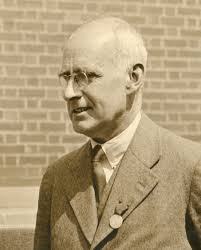
‘Something unknown is doing we don’t know what. We have found that where Science has progressed the farthest, the Mind has but regained from Nature that which Mind put into Nature.
We have found a strange footprint on the shores of the unknown. We have devised profound theories..to account for its origins.
At last we have succeeded in reconstructing the creature that made the footprints. And Lo! It is our own.’
Science, Modern Man’s most embraceable Religion, began with a verifiable claim on planetary self-displacement. Where we stand is not the true center. The Observer is not the unmoving ground.
![Nickolaus Copernicus [1473-1543] Portrait, Torum Town-Hall, Poland](https://not-two.org/wp-content/uploads/2014/03/copernicus.jpg?w=253 "Nickolaus Copernicus [1473-1543] Portrait, Torum Town-Hall, Poland")
Nickolaus Copernicus [1473-1543], a Renaissance scholar and a catholic cleric, began the Modern Age of Science. In his De revolutionibus orbium coelestium:
‘There is no center for the celestial spheres; the center of the Earth is not the center of the Universe; the spheres revolve around the Sun..‘.
Before him, dear old Earth was the static center of the Universe [‘Geocentric’ paradigm]. The Heliocentric Theory [‘Helios’, the Greek Sun-God] found a new deity. The real center, it said, was in-fact the Sun.
But Science keeps replacing every displaced god with a new deity. Is there a center, any center? Is there an Independent, Observing ‘Self’?
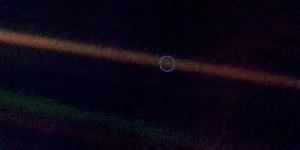
Earth, taken from the hugely successful Voyager mission [1990], 6 billion KM away, as it turned its lens inward one last time before entering interstellar space.
A ‘Pale Blue Dot’, they called it. Less than a Pixel; but still not Zero.
What exactly are you looking at when you look through a telescope? And who is doing the Looking?
‘To my mind, there is perhaps no better demonstration of the folly of human conceits than this distant image of our tiny world‘ noted Carl Sagan a principal scientist on the mission [and one never known to be shy at the mic.]
The universe does not begin in a distant and cataclysmic ‘Big Bang’. It is less dramatic than that portrayed by the scientists.
Logic, as the ancient Philosophers before Aristotle knew and warned, begins in Ontology. If your ontological assumptions aren’t transparent and verified, the Logic will sooner or later buckle.
Logician’s, like Prophets and Politicians, have long cherished the idea of a mystical, divine origin for their calling. But the rules of Logic are not on stone-tablets nor have they fallen from the sky. They are rooted in a set of rarely reviewed, implicit and unstated ontological assumptions.
The paradigmatic, foundational syllogism: ‘All Men are Mortal; Socrates is a Man; Socrates is Mortal’, begins with the unstated assumption that there ‘is’ an identifiable, stable entity called ‘Socrates’. The rest of the inference is inevitable.
You can’t spot a Man holding the same pose twice in a lifetime. Take a snapshot of every moment of a Man’s life: no two will be identical.
The atoms in a Man’s body are in constant motion, continuous replenishment, day and night. His skin gets replaced about once every 30 days; his bones about every 6 months.
Look in a mirror. Is this the same face you saw last night? [Of course it is].
Oh, you mean something inside Socrates…
See the post: ‘The Ontological Elephant’ et al
This must be one of the oldest Posts in my dog-eared file box. I need to update it with some of the new non-linear logic that’s making the rounds. I’ll get around to it.

Formal Inquiry begins with Definition. It is the center bolt of Rational Discourse. And the line limiting fraudulent bombast.
‘Definition’ derives from the Latin: De Finito-‘to make finite’. In other words, to draw a line. to divide and to make Double. Definitions are co-dependent and have no life except in mutual relationship.
You may not explicitly know the definitions, but are implicitly using them in any form of expression, logic or language.
Definition can be verbal, as that provided by a Dictionary. It can be spatial, auditory, tactile, explicit, implicit, smooth, crooked and so on. But there must be a boundary in order to define something. And there must be a definition, explicit or implied, in order to have a dialogue.
But how do I define ‘Definition’ when every definition of ‘Definition’ is itself a defined word? We’ve got ourselves a fenced space where the fence needs to be moved further and further out as we repeatedly try to fence it in.
If you can’t define ‘Definition’ all inference drawn is spurious precision. The Logic will prove whatever you want it to prove.
So what’s the definition of ‘Love’? What’s that? You’ll tell me when you feel it? Touché!
In the wonder-world of the Self-Loop, the word with the most number of posted definitions the last time I checked seems to be the word ‘Set’, as in Mathematical Set, which is another word for ‘Definition’.
‘Know Thyself’: Gnothi Seauton. In the Sanskrit: Atmanam Viddhi. You can find variants of it in every literate culture. The oldest, most ubiquitous injunction in Language.
Self-Inquiry is an absurd idea. I can inquire about any and all things in this great and grand world of ours. Except inquire about me.
Self-Awareness? I can never be aware of that which is aware. I can be aware of anything but the source of my awareness.
Self-Knowledge? I can know about all things in this our magnificent cosmos. But I may never know myself.
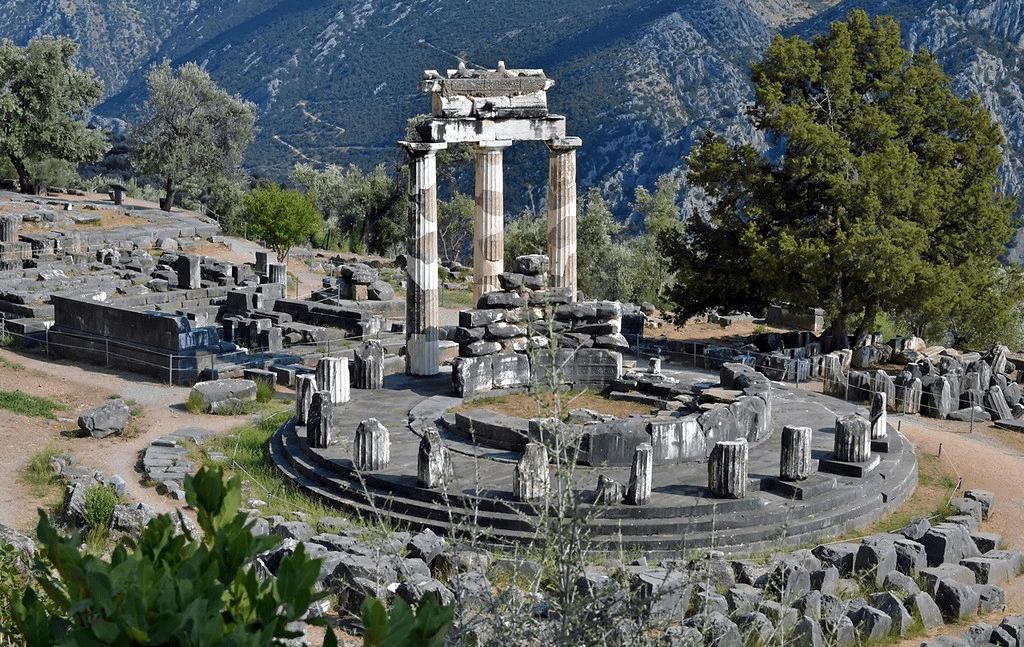
Gnothi Seauton. The celebrated words on the forecourt of the Temple of Apollo at Delphi.
The new Christian Theodosius razed it to the ground hoping to end all remnants of Paganism. It didn’t work.
Oscar Wilde proposed an appealing alternative, a big hit with the New-Age community: ‘Be Thyself’.
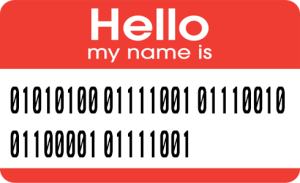
Wisdom may be inexpressible. The ‘Formless’, unnameable. But Information is eminently expressible. In fact, expressibility is what makes it ‘Information’.
This, they say, is the Age of Information. ‘Information’ is from the Latin: In form-atio. Knowledge which has: ‘taken form’, in other words, given name and dimension.
A single line divides a page in two. It just takes one cut to separate a Dot and a Dash, to create the couple ‘0,1’, which together can express all Information.
The Information Age was begat in the Binary System of Number Representation. The ability of the computer’s magnetic core to organize all information in hierarchical structures of pairs in a coding of: ‘0,1’.
‘True: False’, as the Boolean Algebra folks like to say. [Or would you prefer: ‘True: Not-True’?]
But how did you decide on the First-Divide? If you are sure that: ‘True; False’ is itself a ‘True’ distinction you are a convert, no longer an inquirer to its truth. You stand, already divided.
So, as the Zen-Man would say, what then is your Original-Face before you were born to Male and Female?
The coronation of the Binary as Truth. The contemporary understanding of ‘Self and World’.
This gets more interesting as we enter the Brave New World of Quantum Computing and its claim to have exited the limitations of the Binary World. Nothing of the sort. The Loop has just dug itself deeper into the software. See later Posts.
‘From the first Nothing is!’ declared Hui-neng, the pioneering 6th Chinese Patriarch of C’han-Zen.
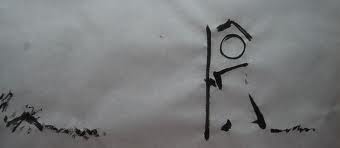
Now, 1,300 years after Hui-neng, a new and widely- publicized survey was done among a group of distinguished Intellectuals. The question was solemnly titled:
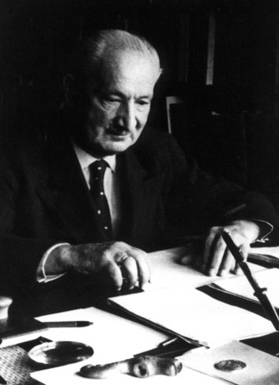
[What is] ‘The Most Important Unresolved Question Of All Time’?
The prize went to Dr. Martin Heidegger for his celebrated query [itself, a variation on Aristotle’s ‘ti on’, literally, ‘What Is?’]:
‘Why is there Something and not Nothing?’
Jeez! You know, smart people say the darnedest things.
If the universe was entirely pink, I will never know it to be so.

There has to be a spot of not-pink somewhere so that I can confirm that the rest of the Universe is pink.
There has to be a minimum of two colors in order for me to see one color. Anything I see is only spotted in relationship to what it is not.
And one more thing. I need to be able stand apart from this pink and purple Universe in order to see that indeed the Universe is pink and purple.
I need, in other words, to be an ‘Independent Observer’. [‘Independence’ requires separation. A helpful redundancy, a shoulder-strap in addition to a seat-belt.]
When Professor Heidegger affirms a ‘Something’, he simultaneously affirms his presence as an ‘Independent [hence Separated] Observing Self’.
This is the basic idea underlying the widely-popular and much-mauled Principle of Co-Dependence, also called the ‘Doctrine of Dependent Designation’, a doctrine on the conditional nature of the Binary.
‘Does God Exist?’, the indispensable question of every Thinking Man and Woman.
The question is premature and presumptuous. The proper question, prior, proximate, more modest in its reach is: ‘Does Man exist?’
The Lady doesn’t need you to verify Her presence, thank you very much. She merely asks that you first confirm yours.
The launch to ‘God’ begins at the Limit of Man. Any ‘God’ [or ‘Reality’ or ‘Truth’] you find prior to reaching the limit is not an act of sober piety but one of vacuous ignorance. A deity in the image of Man. Spiritual candy.
St. Augustine [354-430 CE] arguably the most influential of Christian Theologians warned: ‘Si Comprehendus, Non Est Deus’: If you have understood ‘God’, what you have understood, by that very fact, is not ‘God’ [Sermon 117].
A displayed humility is greater hubris. The grander your tag the greater your pretense. Pick any theological text of any religion and be awed at the sweep of reckless excess.
You always and only seek to first verify the presence or absence of ‘Man’. You always and only orient to mortification, never the other way around [‘God’ or ‘Ultimate Reality’ and such].
There is a problem though, a big one. Any search for ‘Man’ by man is an act coiled in the Self-Loop. You’ll get whatever answer your wishing for.
Ten learned men were holding hands crossing a turbulent river. Once on the other shore, they decided to count themselves to make sure all had safely crossed.
They took turns counting. But every time they counted they came up with a total of nine. There was one missing.
Their desperation grew until a cheeky local kid watching this drama came over and pointed out that the counter kept forgetting to count himself.
So the ten learned men took turns recounting. And Lo! This time they counted ten!
The ten learned men cheered for joy, congratulated each other for being so astute, and went on their way.
Remember to count the Counter. Or be sucked into into the Self-Loop.
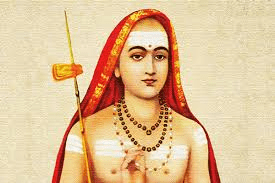
A skeptical prince who was a pupil of Śaṅkarācārya [around 700 CE] decided to test his teacher.
Once when the illustrious scholar was walking up the royal pathway to the palace, the prince unleashed an elephant from the army stables directly onto Śaṅkarā’s path.
The Brahmin, not known for valor of this sort, proceeded to climb up the nearest tree.
The prince approached the teacher, bowed, and inquired as to why the Guru had climbed the tree since according to his own teaching all, including the approaching elephant, was illusion.
‘Indeed’ said Śaṅkarā, ‘the elephant was unreal, but so was your presumption that there was a me climbing a tree.’
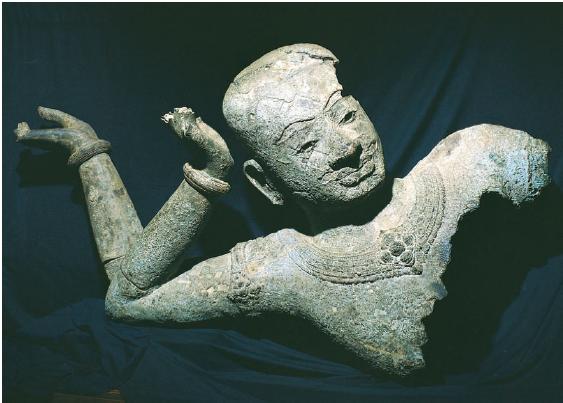
Mystery and enigma unveil more readily in the fluid feminine of Myth than in the linear logic of argument and sermon.
A Story of Creation is told in the Vishnu-Purāṇa where Vishnu as primordial divinity is stretched in slumber on the cosmic ocean of milk. He rests his head on the abyssal serpent Ananta [‘Endless’] and dreams a great and grand dream of the universe.
Vishnu is dreaming a great and grand dream that He is dreaming a great and grand dream, and all men and women, all living things in Vishnu’s dream are in turn dreaming a great and grand dream of the Universe in which Vishnu is dreaming a great and grand dream.
[Lots of meticulous synchronization needed; but then that is why Vishnu is Divinity while you and I take the bus to work.]
Vishnu awakes and a lotus unfolds. Brahma, the divinity of Creation emerges and rules the created world of Vishnu for 100 cosmic years [Maha-Manvantara: 311 trillion human years, rounded-off].
At its end, Vishnu closes his eyes and returns to slumber. The lotus folds and the universe and all that is in it return to their source in the Cosmic Dreamer. In time Vishnu awakes, a lotus unfolds, a new Dream begins.
Stop.
You may not interpret the myth of Vishnu’s Dream in any conventional way. For any commentary you have on this myth is itself part of the myth.
If ‘All is Dream!’ so is my claim that: ‘All is Dream’. If ‘All is Illusion!’ so is my claim that: ‘All is Illusion’.
You reading these lines, right here, just now, about this Dream, according to this Dream, is in the middle of this very same Cosmic Dream.
Now you may choose to not wake-up in the Dream in which case Vishnu will dream that you chose to remain asleep.
Relevantly, this Puranic Tale is widely told but rarely in connection with the Self-Loop. It goes back in its earliest version to the 5th Century CE. A measure of the regressed state of contemporary Dharmic Understanding.
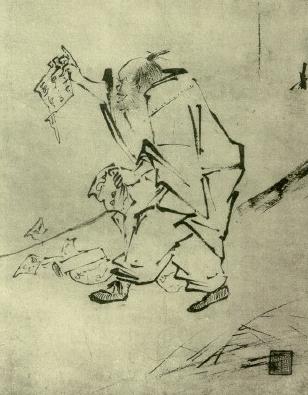
The Buddha didn’t think much of ascetics, god-men or philosophers. And he preferred concrete metaphors to abstract terms like the ‘Self-Eating Expression’.
And so it is that the final self-scuttling turn of Yājñavalkya’s abstract Formula gets a very tangible, everyday illustration.
From the ‘Diamond-Cutter’ Sūtra [Front Page]:
‘My teaching of the Good Law is to be likened unto a raft. [Does a man who has safely crossed a flood upon a raft continue his journey carrying that raft upon his head?]
The Buddha-teaching must be relinquished; how much more so mis-teaching!’
You ‘Burn the Sūtras’ once their work is done. Gut the very boat that takes you across the river. This is the rounding of Yājñavalkya’s Rule [See Post] expressed as the central metaphor of the Buddha-Dharma.
‘Method’ wrote Immanuel Kant, is ‘Procedure according to Principle’.
In the ‘Diamond-Cutter’ Sūtra [See front page] Yājñavalkya’s Algorithm was given a practical turn with the Sūtra‘s central directive: ‘A Bodhisattva should develop a mind which alights upon no thing whatsoever; and so should he establish it.‘
Or in its best remembered concatenation, the seminal rule: ‘Arouse The Mind With No Abiding-Place‘. To get stuck in ‘An Abiding Place’ is to be stopped at an improperly investigated Binary-Truth, confounding it as a foundational truth.
The method has remained largely unchanged over the centuries. Here is Takuan Soho [1573-1645], 1,000 years later, arguably the most influential Zen Scholar/Teacher of modern Japan, summarizing his Teaching:
‘Not Stopping the Mind is Object and Essence’. This: ‘Engendering the mind with no place to abide‘ is the authentic: ‘Mind of Zen’. In counterpoint, a ‘Stopped Mind’ is ‘the affliction of the Abiding Place‘. In his words: ‘Delusion’. [A ‘Stopped-Mind’ is one stuck on a high binary-truth.]
Not-Two is a direct descendents of Yājñavalkya’s Algorithm [See Post] and the convergent terminus of the rounded rule as extended in the ‘Diamond-Cutter’ Sūtra. The: ‘Not-This’ of the Upaniṣad; the: ‘No Abiding Place’ of the Sūtra.
There is no binary-ground to be found that can be settled-in, no ground that you can alight on as foundational truth. There is nothing to cling to nor is there a need to cling to anything.
This condition is the seed that in time results in the creation of a unique construct, the Symbol ‘0’ in the Dharmic Tradition. [See later Post: The Symbol ‘0’]
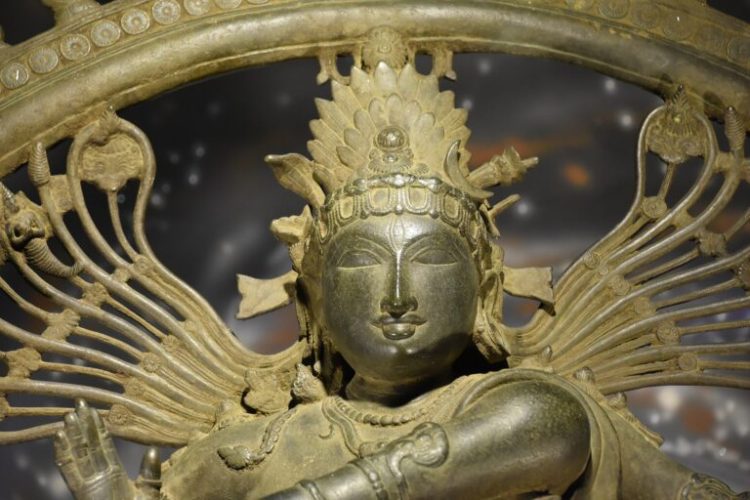
Shiva-Naṭarāja, Chennai Museum, India
Brahman is the central Dharmic posit. So what is Brahman?
From the Brihadäranyaka Upaniṣad [2;3;6]: ‘Now, therefore, the description of Brahman: ‘Not this, Not this’ (Neti, Neti); for there is no other and more appropriate description than this’.
The full formula, which originates with Vaiśampāyana’s distinguished disciple Yājñavalkya, reads: ‘Neti, Neti’: ‘It is not this! It is not: ‘It is not this!’ [around 1,500 BCE, Oral To Script].
Why repeat the Rule twice? It is not just an expression of emphatic negation. It is repeated twice because the full expression is a meta-statement. The deconstruction must finally turn in on itself. The rounding must complete. Else, the recursive rule will enter into an insidious and indefinite spin: The Self-Loop.
The original formula was as a verb [Neti!; ‘Not-This’], an Act that must scuttle [Negate; ‘Eat’] itself in the rounding. Ultimately, the term ‘Brahman‘ itself gets swallowed into the belly of the Algorithm.
‘Neti, Neti’: ‘It is not this! It is not: ‘It is not this!’ is the earliest algorithmic form of the logico-lingual Self-Eating Expression.
Yājñavalkya himself [as did Aristotle in Metaphysics] used a series of compounding contradictions to lay the stage: ‘An endless infinite reality’ which is also ‘an inner controller’. A: ‘mass of intelligence’ which is also: ‘the unattached and the undecaying’, and so on.
Yājñavalkya‘s was the tightest description of ‘Not-Two’ [a-dvaya]: ‘Neither inside nor outside; neither above nor below’. Much of what settles as ‘Method’ in the early literature originates with him. The Axioms of Sight and Self, the recursive negation rule, the marking of: ‘The Other Shore’, et al.
Every major Dharmic School expresses its truth using a variant of Yājñavalkya’s Algorithm. See Śaṅkarācārya’s Nirvāṇaṣatkam [around 800 CE], or a millennia later, Ramana Maharishi [1879-1950].
Yājñavalkya’s Algorithm is the origin of the Symbol ‘0’ in the Dharmic Tradition. [Neti {Not}; later as Śūnya, Pujya, Bindu et al]
The Decimal System of Number Representation [Sanskrit ‘Das‘, for Ten] births within 200 years of the oral-rendering of the ‘Diamond-Cutter’ Sūtra [Front Page]. See Posts.
The Mathematician Pappus records Archimedes [287-212 BCE]: ‘Give me a place to stand and [with a lever] I shall move the Earth’.
You don’t need to move the Earth. But you do need to step back to Nothing to see what’s going on with Everything.
In looking for ‘Everything’, you must remember to include the Looking-Subject. ‘Everything’ is radically inclusive.
In looking for ‘Nothing’, you must remember to exclude any sensory, cognitive or affective representation of it as Object. ‘Nothing’ is radically exclusive.
But what happens if you forget the Looking-Subject? Or stop-short of Nothing at ‘Something’? A new and sophisticated word for this forgetting is ‘Self-Reference’. And to get stuck in it is to get snarled in the Self-Loop.
‘Look cuttingly: Who is it that looks? When you thoroughly penetrate this, the clarity stands out as lacquer black as a coal goose standing in the snow.
Just abandon the myriad Dharmas, discard reason, let go of loss and gain, good and bad this instant and return to yourself and look penetratingly:
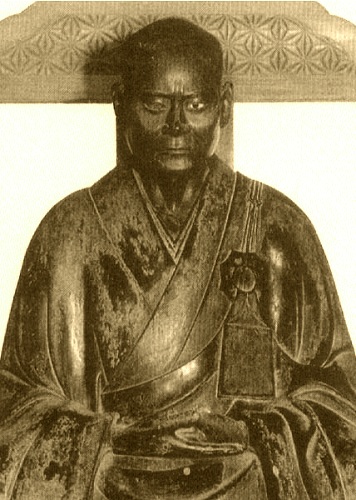
‘Who is it that Sees?’
The four elements are without self. I am originally without a master. This masterless master is the body, and this selfless self is true nature.
Body and Nature are not two, and the ten thousand Dharmas are one. In this unity there are no sages and no ordinary people. Where can life, death and Nirvana come from?
The merit of existence and non-existence does not apply to this wondrous wisdom. How can words or silence, movement or stillness affect it?
There are many ways to interpret this classic poem. I’ll leave it to the reader.
Honest Inquiry begins inwards, backwards. The assumed Subject had to be clearly identified, the Inquirer’s Platform laid bare, prior to any investigation on an Object or else one keeps tripping on the Self-Loop. It was the defining difference that marked early Dharmic Inquiry.
The modern assumption that the Subject can be ignored as long as the Object was clearly in view was, after repeated and painful experimentation, found to be false.
In time there spread a wider appreciation of the issues involved. That this type of Inquiry was of a very special and perilous character, that any inquiry on the nature of the Subject, by an assumed Subject, was fraught with miscues, wrong turns and short stops.
Vedic Truth: from Vid; To Know, To See; Proto-Indo European Weid, as in Vide, View, Video. Hence Schools of Philosophy as Darśanas, from dṛś: ‘To View’.
The Philosopher [Phílosophía: ‘Lover of Wisdom’] is replaced by the Seer. I can debate you to the grave. But I can’t unsee what I see. One loves Wisdom of course, yet the conviction is unstable until I see. To ‘See’ is the irreducibly simple act.
‘Seeing’ in its analytic meaning is is all about catching the beam in your own eye. I catch the beam in my eye: and catch myself catching myself; and catch myself catching myself catching myself. And so on.
I See. I See that I See. I See that I See that I See…I Know. I Know that I Know. I Know that I Know that I Know…I am Conscious. I am Conscious that I am Conscious..and so on.
This is the unwinding. Each element ‘eats’ the one prior to it once it catches the beam in its own eye. Step-back until you are in clear view of what is going-on.
The issue of Self-Reference, a defining difference between Dharmic and other religious templates, leads to the evolution of its primary investigative tool: Formal Meditation Practice.
Vedic inquiry begins with Formal Meditation Practice [Dhyāna], the original ‘Laboratory For Inquiry’. [‘C’han’ and ‘Zen’ for example are morphed extensions of the word ‘Dhyāna‘.]
An elemental and time-tested tool, it is the single-best practice to catch yourself catching yourself, to grab the swirling cat’s tail.
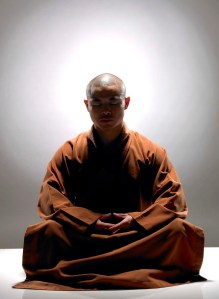
How do ‘I’ investigate ‘Me’? How do I spot the beam in my own eye?
Meditation isn’t an aimless open-ended Sitting. There isn’t anything warm and fuzzy about it. Properly done it should gut you out.
Aside from the Dharma, I continue to remain incredulous that self-referential loops whether in Language or Mathematics or even social-systems such as Post-Modernism or Marxism, are so routinely missed.
No person should teach, write books [or websites], or hold-forth on the Dharma until his bottom is permanently numb from long hours of Sitting. The Numb-Bottom Test.
See the Posts on Science, in particular the ‘Scientific Stance’ which ironically shares this requirement in order to identify the ‘Objective World’. It was the steep decline in Dharmic Traditions of Inquiry that made it miss the Scientific Revolution altogether.
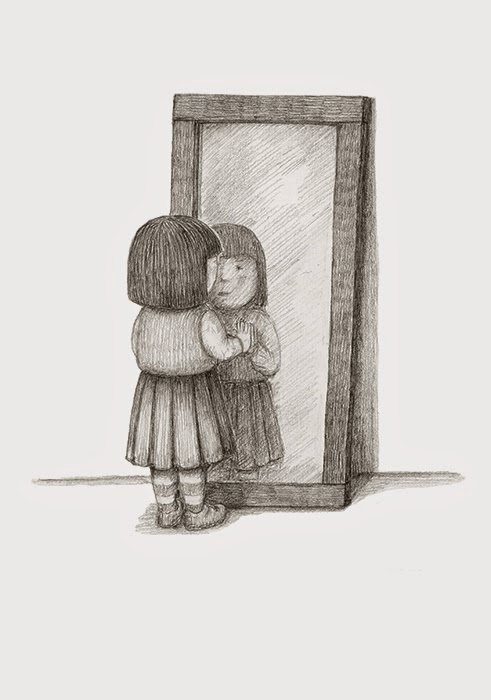
Step into your bathroom. Turn on the lights. Wipe mirror with a damp cloth. Look.
Do you see your eye? Of Course you do. But what you don’t see is the source of your vision.
In fact, what you see in the mirror cannot be the source of your vision. In fact, it can be anything but the source of your vision.
Your source of vision may never see itself. And anything you see as the source of your vision, by that very fact, is confirmed as not being the source of your vision.
There are no claims of error in which I can have greater conviction. [Note that these Axioms of Sight precede and preempt the Axioms of Logic which originate in primary ontological assumptions. See the Posts on the Origins of Formal Logic.]
This Axioms can be extended at many levels. I can’t see the source of my seeing, hear the source of my hearing and so on.
More generally, I can’t have any true relationship with ‘Me’. Any relationship I have can only be with ‘Me’, the idea of ‘Me’, in a confounding of ‘Object’ as ‘Subject’.
The Axioms of Sight are the Virgin Twins. They are not to be violated. So what happens if I do? I then: ‘Give Birth To Myself’.
I look into a mirror. And I am absolutely certain that what I see is the source of my vision.
In claiming to see my own eye, I become an Object to myself as Subject. I double, I multiply and divide.
The ‘Cycle of Birth and Death’. The Self-Loop.
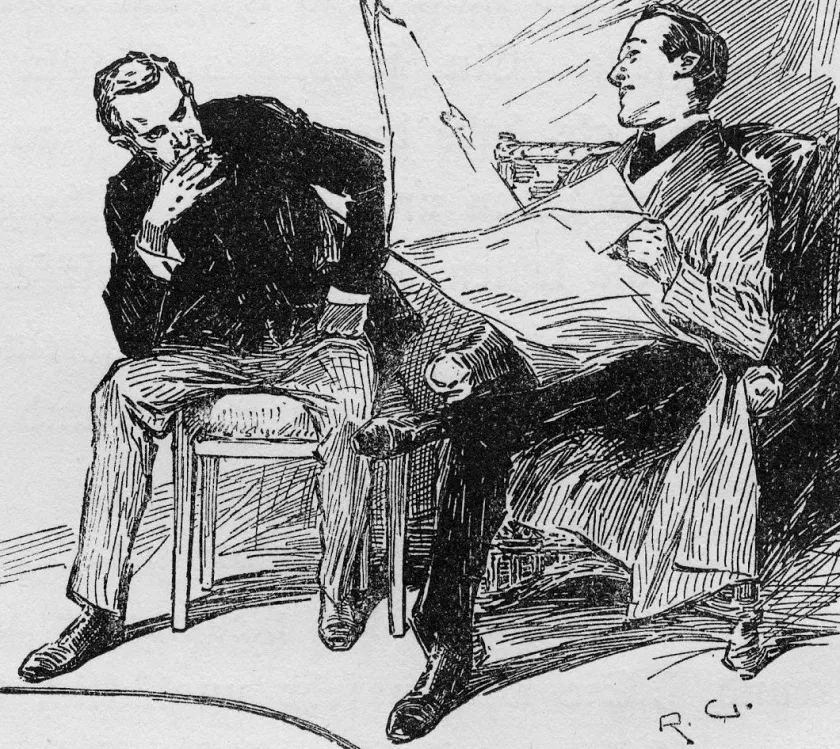
‘How often have I said to you [Watson], that when you have eliminated the impossible, whatever remains, however improbable, must be the truth’.
Arthur Conan-Doyle: ‘The Sign of Four’ [1890]
Methods of Inquiry that have immediate credibility to the modern-ear begin with the early Greek philosophers.
Inquiry must begin, they said, with the assertion of Axiom, the investigative analogue of the atom. [You can’t prove an Axiom. Bad idea. The idea of ‘proof’ itself is rooted in an Axiom. But people try all the time.] But in most cases we have to settle for the Assumption. In a fogged-in world it is the reasonable man’s truth.
Unlike its ancestor the Monastery where Meditation Practice involved sustained inquiry into assumptions, every subject taught at a Modern University begins with implicit, mostly unstated assumptions called ‘First Principles’.
Every known ‘First Principle’, in Philosophy, in Logic, in Language, in Science, is granted legitimacy, takes life, atop the Binary-Platform, the ‘First Presumption’ that there is an ‘Independent [hence separated] Inquirer’.
These range from the thoughtful to the fearlessly flippant. The professors, busy folks, are unlikely to remember what they are. Ask the lady at the front-desk for the ‘First Principles List’. And wreck her day.
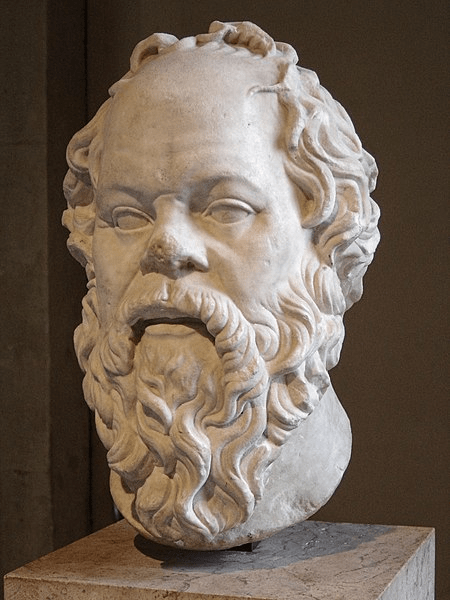
In the best known lines from Plato’s Phaedrus:
‘But I [Socrates] have no leisure for them [other inquiries] at all.
And the reason, my friend, is this: I am not yet able, as the Delphic inscription [Gnothi Seauton] has it, to know myself; so it seems to me ridiculous, when I do not yet know that, to investigate irrelevant things.‘
University, from the Latin: Universus, ‘Whole’.
Did you know that by most reliable accounts the world’s oldest University still giving courses is Bologna, founded in 1088 C.E.?
And that it originated in the monastic schools that had been active for nearly 400 years until the University was established? No? And you have a degree from Oxford [1167 C.E.]?
Now what did monks in the 11th century do when not making fine brandies? Monks meditate. Navel-Gaze. Go ‘Inward’.
Now when was the last time your Philosophy Professor suggested a moment’s quiet before discussing Heidegger on the ‘Meaning of Meaning’? Ten minutes of Formal Meditation preceding John Rawls?
You can do a Doctorate in Philosophy today in the best Universities without ever raising the question of the ‘Subject’ doing the Inquiry.
If you suggest that it may be relevant, the Professor will likely take you aside and suggest that you might be better suited for Art History.
The word ‘University’ is a very specific term for an institution that birthed in the Western historical and religious tradition. There were Institutions of Learning that predated the specific concept of the University, Nalanda or Takshasheela for example, but they are not to be called ‘Universities’.
And the first and fundamental presumption of Formal Inquiry is the accepted convention, the unstated conviction, of the presence of an inquiring Subject ‘Independent’ [hence separate] from the investigated Object.
It is meaningless to talk of ‘Inquiry’ if the Subject is conjoined with the Object of Inquiry. But then, the word ‘Meaning’ itself is predicated on the presence of a ‘Me’.
As before, the issue is the cardinal claim of ‘Independence’. It is nearly impossible to find a zero-correlation [i.e ‘Independent’] state in Nature. But we begin all Inquiry by claiming this majestic status for ourselves.
We can spend decades testing an academic assumption that underpins a trite theory. But skip out on testing this first presumption that precedes the posit of Theory itself.
If you decide to proceed with the Inquiry, I’ll add a second [among several] which you might find helpful further down.
The Tradition of Formal Inquiry declares that among equally valid explanations and outcomes, the one with the least assumptions wins: Entia non sunt multiplicanda praeter necessitatem.
And he who needs the additional assumptions gets to defend them. The burden of proof rests with the claimant. But we shall not quibble. And we shall not whine.
[This has numerous variants: Falsifiability, ‘Russell’s Teapot’, ‘Occam’s Razor’ and so on, much of it relevant to investigating the wild religious claims of visiting overnight prophets and gurus.]
‘Although the Theory of Relativity makes the greatest demands on the ability of abstract thought, still it permits the traditional requirement of Science, as it permits a division of the world into Subject and Object and hence a clear formulation of the Laws of Causality. This is the very point at which the difficulties of the Quantum Theory begin’.
Elsewhere, on the method of proper observation, Heisenberg writes: ‘What we observe is not Nature in itself but Nature exposed to our method of questioning’. Try and hold on to that insight as you read the Posts.
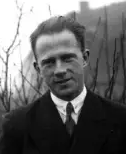
Werner Karl Heisenberg [1901-1976]
Nobel, Physics, 1932
The Self-Eating Expression is the universal phrasing for the intuition of Not-Two in the vocabulary of the speaker. It is a summary-term put-forth by pioneering inquirers when finally confronting ‘The Wall’ of Not-Two.
The Tao
From the opening line of the opening verse of Chinese classic, Lao Tzu’s, Tao Te Ching [Circa 5th Century BCE], the first philosophy of China:
‘The True Tao is nameless; what is named is not the True Tao. The True Tao cannot be told; what is told is not the True Tao’.
Name the Tao, and what you have named, by that very fact, is not the Tao. Talk about the Tao and what you are talking about is not the Tao. The Tao is a ‘ Self-Eating Expression‘.
But this didn’t stop Lao Tzu from writing his seminal classic the Tao Te Ching which names and talks all about the Tao [sort of like this Site].
’Taoism’s instructs all men to live in Wie Wu Wei: ‘Doing Not-Doing’. The Bhagavad Gita exhorts the man to: ‘Active-Inaction’. Or as the Chinese Taoists [Hsi-tz’u] declared, it is: ‘Where Yin and Yang do not penetrate [we call it the Numinous]’.
The Buddha-Dharma
The opening Koan from the venerated Mumonkon Collection is: ‘Joshu’s Mu!’, held through history as the most powerful of all Zen-Koans.
‘Joshu’s Mu!’ is a negative particle, a vociferous assertion of negation. A fiery, full-blast ‘Self-Eating Expression‘.
An early condition for the seminal Buddhist expression Śūnyathā was as Śūnyathāsūnyathā, the ‘Emptiness of Emptiness Itself’. Corral Emptiness and what you have corralled, by that very fact is not Emptiness. The earliest definition of Śūnyathā was as ‘This Unformulated Principle’ [Front Page] before it diluted into various ‘Doctrines Of Codependence.
[The term ‘Emptiness’ was borrowed from the translated English vocabulary of Classical Logic [See Post]. ‘Emptiness’ has nothing to do with imaginary spaces of vast blankness, a common miscue in modern Sanghas.]
The Dharma
Upanishad is Rahasya: a ‘Secret Transmission’, not to be passed-on to the unprepared. Sanskrit sacred text expands from an unsaid center in concentric circles of ferociously absurd verse softening to increasing sensibility.
At the peak of Vedic intent, Brahman is Nirguna Brahman (without attributes; you cannot express something with no attributes. As Sahguna Brahman, (with attributes) all names are unabashed contradictions: Being-Becoming; Sonant-Silent; Eternal-Temporal; Explicit-Implicit, and so on. In our terminology, Self-Eating Expressions.
According to the Kanchi Paramacharya [1894-1994], holder of the lineage-seat and an authority on the subject, ‘The Nameless’ is the original name for the wider umbrella of Schools and Faiths that is known as ‘Hinduism’. Is the word: ‘Nameless’ a name or not a name? It is neither; it is a ‘Self-Eating Expression‘.
Islam
The Aramaic Alaha, the language that Jesus spoke, is in turn related to the Arabic Allah: ‘The God’, and the Hebrew: Eloah [Elohim, Elohai]. It was originally a loose reference to a regional deity and in-time appropriated into emerging Islam.
The opening line of the principle prayer of Islam, the Shahadah reads: ‘La Ilaha il al-Lah’: ‘There is no God if it be not the God’.
‘La Ilaha il al-lah’, is an informed rendering of insight as ‘Self-Eating Expression‘ meant for the trained ear and in the language of the day. In High-Sufism [Islamic Mysticism] the final stage of practice is termed Fana al-Fana, the ‘Annihilation of Annihilation itself’. A ‘Self-Eating Expression‘; naturally, necessarily.
Aristotle’s ‘God’
Aristotle formulated hugely influential models of reality [they lasted well past Copernicus; Immanuel Kant begins with him]. But oddly enough, Aristotle installed a strange character at the sanctum-sanctorum of his precise modeled world.
From Aristotle’s Metaphysics: ‘There is therefore also an Unmoved-Mover, being eternal, primary and in act..the first mover is a necessary Being..and is thus a first principle, for there is always a mover of things moved, and the first mover is itself unmoved.’ Aristotle’s celebrated: ‘Unmoved-Mover’. A classic ‘Self-Eating Expression‘.
[See the later Post on how Aristotle uses a variant of it as his defense of the ‘Principle of Contradiction’ [in delightful irony, also called ‘The Principle of Non-Contradiction’], what he called: ‘The First Principle of all Analytic Cognition’.]
Proofs And Paradoxes
The ‘Self-Eating Expression‘ is pervasive not just in ancient texts and traditions but at the heart of modern logic and mathematics and their most celebrated Proofs and Paradoxes. We’ll get to the one’s that mark the birth of the present digital-age of Binary-Truths, the period 1930-1950 CE, in later Posts.
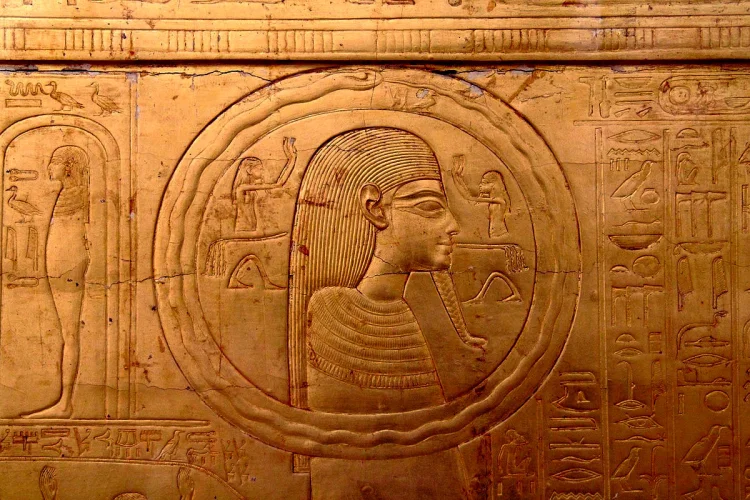
The sarcophagus of Tutankhamun [1,300 BCE]. Note the coiled snake at the center trying, but failing to swallow its tail.
Ourobouros [Classical Greek; literally: ‘Tail-Eater’], the earliest allegorical symbol in Alchemy with its origins in early Egypt and Greece marking the summum bonum of Immortality. The ‘Cycle of Birth and Death’. The Binary that makes us pause.
Ourobouros; in our lexicon, the ‘The Self-Eating Expression’.
Tát, literally ‘That’ [Tát Tvam Asi; Aum Tát Sat et al], is an overarching expression that goes back to the first Vedic Texts.
‘That’, the briefest possible assertion is an ‘Expression of Inexpressibility’. It is an immediate, unregenerate contradiction, grammatically homeless, a lexicographer’s nightmare, and meant to be so. We call these Logico-lingual terms: ‘Self-Eating Expressions’ [‘SEE’].
Siddhartha Gautama’s chosen name for himself was not as the ‘Buddha’, a later appellation, but as the Tát-āgathā [literally, ‘That’-Gone; or less cryptically: ‘One in view of ‘That”].
The English translation of the expression: Śūnyathā, so central to the tradition of Chan-Zen, is as: ‘That-Ness’, from Táttatha, the same ‘That’ as above.
That’ [Tát], the simples terminal Assertion, is the direct parent of the ‘Not’ [Yājñavalkya‘s Neti], the simplest terminal Negation and most likely the immediate ancestor of the Symbol ‘0’ in the Dharmic Tradition. An assertion asking for its own negation, it was the first graphic-visual rendering of the Self-Eating Expression.
The meaning of the expression Tát [‘That’] began regressing as early as as the Chandogya Upaniṣad where several verses refer to it as a: ‘Subtle Inner Essence’, the forerunner to the dominant role of an ‘Inner Self’ in later Vedantha.
It is one of the reasons that the synonym for Śūnyathā was rendered as Táttatha [‘That-ness’] an otherwise unwarranted abstraction [you cannot abstract ‘That’ except as a pedagogic convenience].
How does one inquire into ‘Two-ness’ when the very claim: ‘Two-ness’ mounts on the distinction of ‘Two’ [‘Two; Not-Two’].
How does one talk about the ‘Binary’? when the notion of ‘Binary’ itself is a binary division [Binary; Non-Binary’]?
How does one talk about exiting the Binary when the notions of ‘Entry and Exit’ are themselves Binary constructs?
How does one talk about a ‘Modeled-Understanding’ when the notion of ‘Model’ itself arises from a Modeled-View? [See Post on ‘Model’]
How do ‘I’ investigate ‘Me’?
The confrontation with this loopiness births the Self-Eating Expression [‘SEE’], the next Post.
Traditionally, Inquiry into Self-Referential Loops has been the preamble to actual Inquiry in the Dharmic Tradition. [See Posts; the discipline is long-lost as can be seen in the quality of contemporary Dharmic Inquiry]
In the Western Tradition you can see selective acknowledgment of this issue in such early thinkers as Heraclitus [‘Logos’] and Denys the Areopagite, more modern thinkers as Nicolas of Cusa [Docta Ignorantia; Coincidentia Oppositorum] among the Mystics, the new Quantum Physicists among the Scientists and so on.
See Friedrich Hegel on ‘The Purpose of Philosophy’ [‘Hegel To Heidegger’].
I had been around. And I had slid. From an amused bemusement, past simple bewilderment, beyond all sophisticated skepticism to a lurching unquiet desperation.
A vocal cleverness has replaced the ancient ideal of a Learned Ignorance. Scrape the surface and nothing makes sense. So I sit on the side and agree to pretend.
It takes a Genius to answer: ‘Gravity makes the Apple fall’. And a Fool to ask: ‘Why does Gravity make the apple fall?’
Isaac Newton (1642–1727) wise, died a pious Catholic seeing no quarrel here between law, origin and purpose.
What was there before the ‘Big Bang’? And where did the Monkey come from that Man descends from?
If my body temperature changes by a measly 6 degrees F, I pass out. [I’m still looking for my ‘Consciousness’ in the rest of the range.]
So is the sky out there blue? Or is it right here, the electro-chemical rinse coursing along my neurons as I look?
The visible part of the Electromagnetic Spectrum is about a third of one percent. ‘Real’ seems a dodgy idea to me if my visibility blanks out at 0.3 %. [Where did the Universe go?]
Our rules of arithmetic repeatedly fumble at the ‘Measured Speed of Light’. So what does addition mean?
‘Ask the lady in the corner office’ says the annoyed Scientist. ‘These are questions below my pay-grade. Science is not designed to answer frivolous stuff like this’.
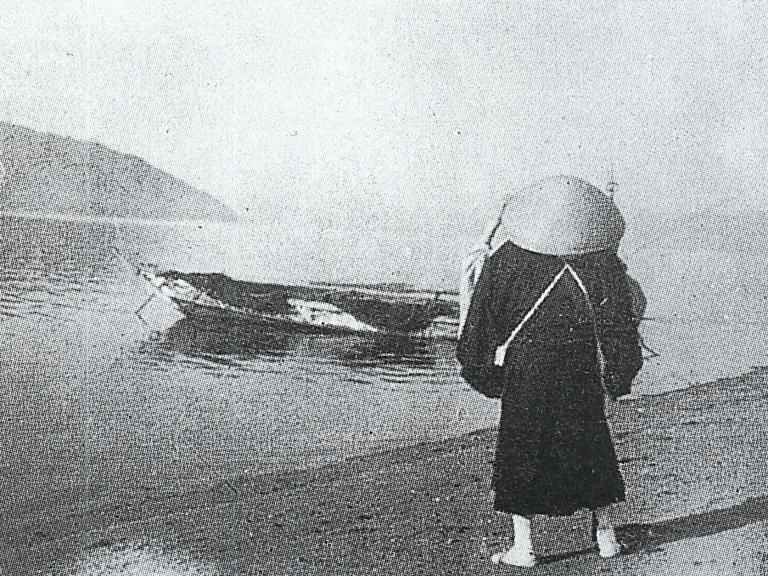
‘For forty years
I’ve been selling water
By the river-bank, Ho, Ho!
My labors have been wholly without merit’
Harada Daiun Sogaku
[1861-1971]
 Not-Two
You must be logged in to post a comment.